Sorry, you need to enable JavaScript to visit this website.
Skip to main content

Workshop on the Establishment of the Big Cat Network and Transboundary Conservation of Amur Tiger, Amur Leopard, and Snow Leopard in North-East Asia

The Workshop brings together experts, conservationists, and stakeholders to address the urgent need for coordinated action to protect these endangered species. Building on decades of collaborative efforts, the event will focus on reviewing the current conservation outlook, sharing knowledge, and developing a joint platform to monitor and conserve big cats across national borders.
Training Workshop on Migratory Bird Conservation and Wetland Management in North-East Asia

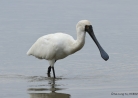
This training workshop in Vladivostok brings together researchers, conservationists, and stakeholders from across North-East Asia to strengthen skills and share the latest knowledge on migratory bird and wetland conservation. Through seminars, field visits, and interactive discussions, participants will learn about modern monitoring and management techniques, with a focus on flagship species like the Black-faced Spoonbill, White-naped Crane, and Hooded Crane.

Consultation Meeting on the Project “Connectivity Conservation for Habitats of Flagship Migratory Birds in North-East Asia”

North-East Asia hosts critical habitats for several migratory bird species, whose conservation requires coordinated cross-border action. In line with the NEASPEC Nature Conservation Strategy and the designation of six flagship species, the project “Connectivity conservation for habitats of flagship migratory birds in North-East Asia (2024–2027)” focuses on the Black-faced Spoonbill, Hooded Crane, and White-naped Crane, and aims to assess species demographics, analyze threats from agriculture and energy development, and build capacity.

Technical Review Meeting on the Draft Revised International Single Species Action Plan for the Black-faced Spoonbill

The Black-faced Spoonbill (Platalea minor), an endangered species and NEASPEC flagship species, has seen remarkable population recovery thanks to strong international cooperation. Building on the original International Single Species Action Plan (ISSAP) launched in 1995 and revised in 2010, a new revision for the 2026–2036 period has been proposed by the Black-faced Spoonbill Working Group to address persistent and emerging threats such as habitat loss, urban expansion, and climate change.

Training Workshop for Young Crane Researchers in North-East Asia

Cranes are among the most iconic yet threatened bird species in East Asia. These species depend on increasingly vulnerable wetlands and grasslands, which are under growing pressure from development, climate change, and habitat loss and degradation. Ensuring the long-term survival of cranes requires not only urgent conservation measures today, but also the development of a new generation of skilled researchers and conservation professionals to lead sustained efforts into the future.